13 Reasons Why: Talk To The Reasons
A mobile interactive episode for the hit Netflix series that let you talk directly to the characters and get you immersed in the drama.
A mobile episode where you were the main character
For the launch of 13 Reasons Why Season 2, Netflix and Moth + Flame created "Talk To The Reasons," a mobile web experience that turned the viewer's phone into a portal to the world of Liberty High, with incoming notifications, FaceTime calls, Houseparty chats, and iMessages from the show's characters that pulled them into the drama.
The hook: when characters called, you could actually talk back. Using interactive voice response, the system listened to what you said and delivered character responses based on your answer. Each exchange felt like a real scene from the show, not a one-way broadcast.
Writing a show that listened
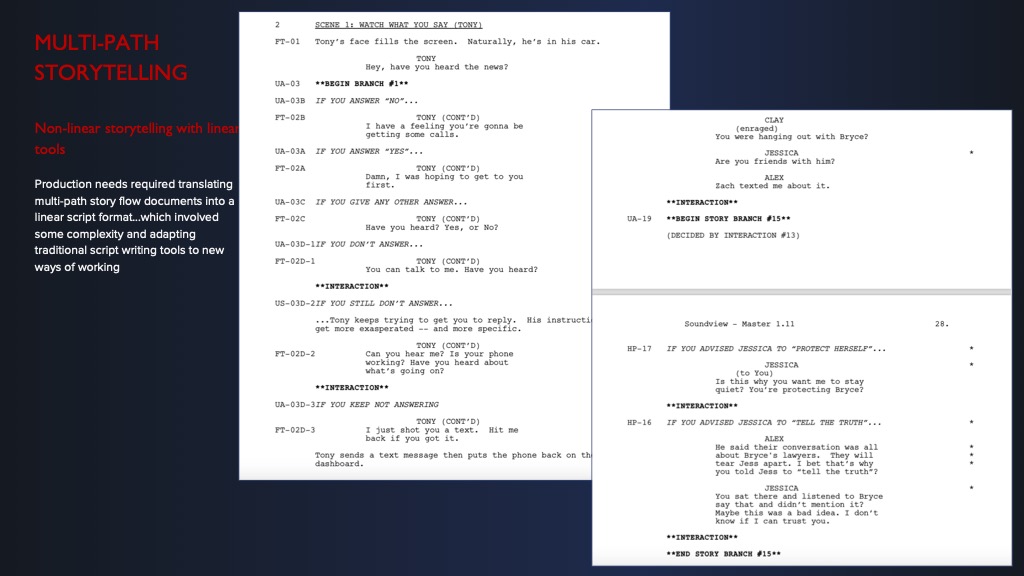
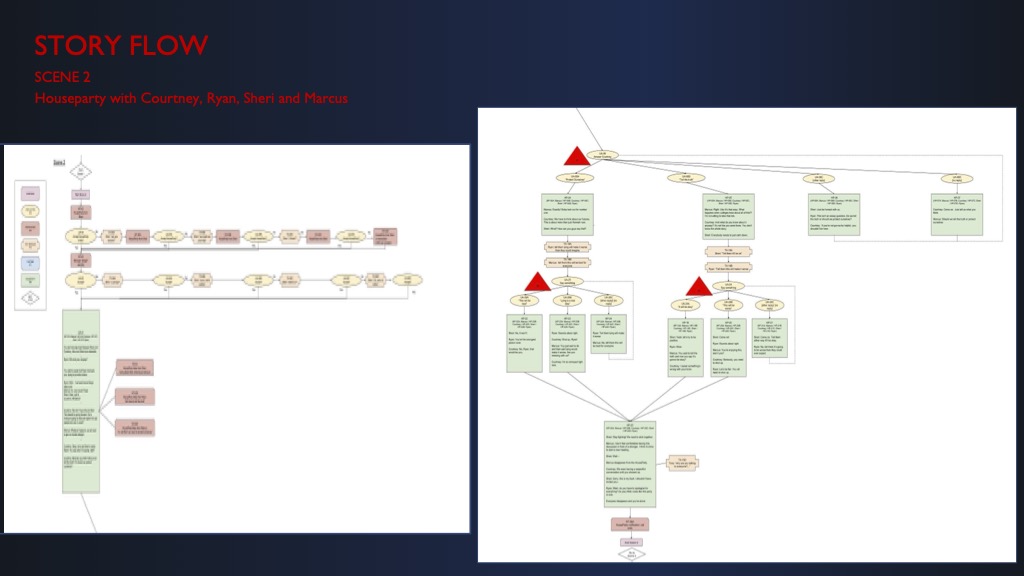
I was a co-writer on the project, responsible for scripting all eight character threads, designing story dilemmas that made the audience choose sides; depending on what they said, some characters would approve of them while others would be offended. I scripted the branching dialogue trees that powered the interactive voice response system; each character needed to feel authentic to the show while also functioning as a conversational entity that could handle whatever the user said.
Making IVR feel like character, not phone tree
The core challenge was writing for a format that had to work in every direction. A player might say yes, no, something unexpected, or nothing at all – and the character on the other end had to respond in a way that felt human and in-character regardless. That meant writing not just the primary branches but all the graceful fallbacks, the moments of "I didn't catch that" that still sounded like Tony or Clay rather than an automated system.
Each character also had to sustain a coherent emotional arc across the interaction, even though the path through it was different every time. The branching logic had to be tight enough to be buildable but flexible enough to make players feel genuinely heard.
Press attention and a proof of concept
The experience was covered by Refinery29, Teen Vogue, and others as a standout example of interactive promotional storytelling, noted specifically for feeling genuinely immersive rather than like a marketing stunt. It demonstrated that IVR, a technology usually associated with customer service hell, could be repurposed as a narrative medium when the writing and character work were strong enough to carry it.