The Lizzie Bennet Diaries
The groundbreaking series that re-invented Pride and Prejudice for connected audiences, launched a wave of literary-inspired web series, and became the first YouTube show to win a Primetime Emmy.
Austen for the internet age
In 2012, I was invited to join a small, independent team to explore a question: what if Pride and Prejudice happened today, and Lizzie Bennet vlogged about it? The answer was The Lizzie Bennet Diaries, a year-long transmedia serial that ran in near-real time, told through YouTube vlogs, character Twitter accounts, Tumblr posts, and an ever-expanding cloud of fictional social and web storytelling.
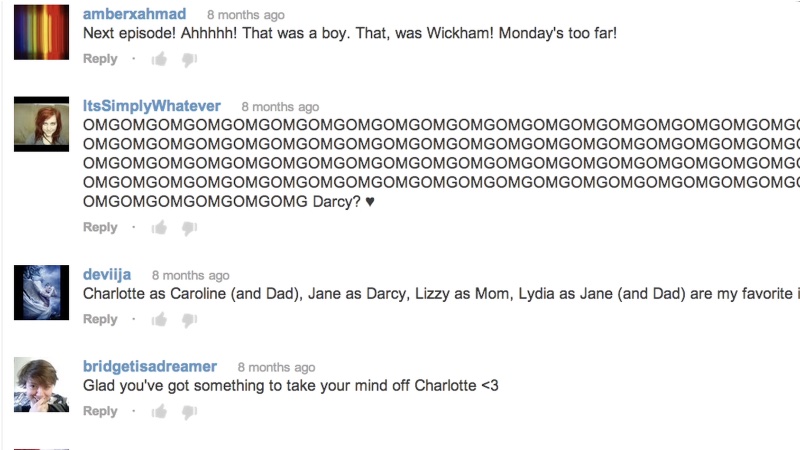
The show ran for 100 official episodes over the course of a year, with characters living and posting on social media between episodes, as if they were real people. Viewers didn't just watch – they @-replied to Lizzie, argued with Wickham, and followed Lydia's story arc through her own channel before the main series caught up. The story was distributed across platforms: you could watch only the YouTube channel and follow the plot, but the experience was richer if you inhabited the full social media world alongside the characters.
It was produced on a shoestring budget with zero marketing spend, built an audience through word of mouth and fan community, and ended up one of the most-studied examples of transmedia storytelling ever made.
Transmedia producer, interactive architect, staff writer
I served as Transmedia Producer and a member of the writing staff for the series. I was responsible for conceiving, designing, and running the entire social media layer of the show. That meant building out over 35 character profiles across Twitter, Tumblr, Facebook, and other platforms, developing distinct voices and behavioral rules for each, and managing a small team that created and published transmedia content throughout the year-long run.
On the writing side, I contributed several episodes to the main series and helped develop story arcs, with particular attention to how narrative events would need to be seeded and echoed across platforms. Keeping the social media timeline in sync with the video release schedule – and making the characters' offscreen behavior feel continuous rather than promotional – was a constant craft challenge.
After the series ended, I co-created and executive produced the direct sequel, Welcome to Sanditon, which extended the Pemberley Digital universe and was itself an Emmy finalist.
Building a persistent world across social
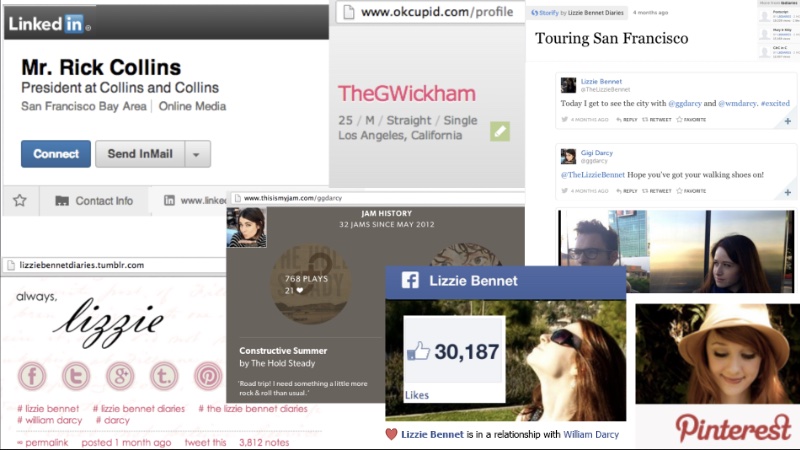
The core design challenge was making the social media layer feel inhabited; not like a promotional add-on, but like the actual texture of these characters' lives. We maintained meticulous continuity between the video timeline and the social timeline, which ran slightly ahead. A character might mention on Twitter that they were heading to a party, and the next episode would start with Lizzie recapping what happened at that party. Characters also engaged directly with fans, responding to their posts and sharing (or pushing back on) their opinions. In one major moment, Lydia had an on-screen meltdown in which she repeated several criticisms that had been leveled at her by fans.
One of the key design decisions was to have characters create social media content well before their first appearances on screen. For the entire first month of the show, audiences only saw four characters on video and social: Lizzie, Jane, Lydia, and Charlotte. But unbeknownst to them, Darcy, Bing Lee and Caroline were also on Twitter, posting to and for each other. When those characters entered the main story, audiences found an entire month worth of narrative that had been hiding in plain sight. This made the storyworld suddenly feel bigger, and it was a technique we repeated throughout the run of the series. One character, Gigi Darcy, posted consistent social content for eleven months before finally appearing on screen. This amplified the story's verisimilitude, and created the feeling that it could go anywhere.
The first YouTube show to win a Primetime Emmy
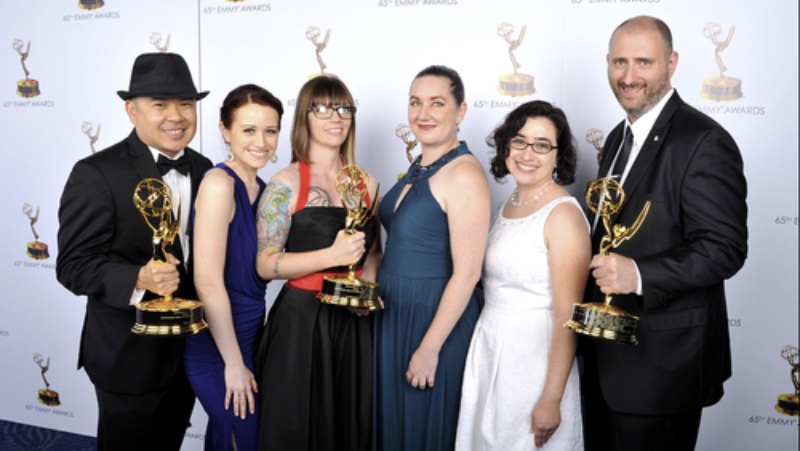
In 2013, The Lizzie Bennet Diaries won an Emmy award for Outstanding Creative Achievement in Interactive Media – Original Interactive Program, becoming the first YouTube-distributed series to win a Primetime Emmy. The award specifically recognized the transmedia work: the character social accounts, the interactive architecture, the blurring of the boundary between the story world and the real world.
The numbers told a parallel story. The show accumulated over 60 million YouTube views, built an active fanbase across dozens of platforms, and launched a Kickstarter for a DVD release that met its $60,000 goal in under six hours and ultimately raised almost half a million dollars. All of this happened with no marketing budget, and through an audience that was genuinely evangelical about the show.
The cultural footprint extended well beyond its run. The Guardian called it "the best Austen adaptation around" at the 200th anniversary of Pride and Prejudice. It's been cited in academic work on transmedia storytelling, taught in university media courses, and remains a reference point for how to do social storytelling well. The Pemberley Digital universe it launched went on to produce Emma Approved (itself an Emmy winner), two novelizations, and inspired an entire wave of literary webseries adaptations.
For me, The Lizzie Bennet Diaries was a validation of a decade's worth of social storytelling experiments, and codified an approach to transmedia I still use: individual platforms are not as important as the aggregate field of the story's ecosystem. If you build the storyworld to meet audiences where they already are and fold the story into the fabric of their lives, they will take you with them wherever they go.