Social Stories
Early social media fiction experiments: Twitter novels, collaborative live events, and participatory multiplatform storytelling
Inventing social fiction before it had a name
Before "transmedia" was a buzzword and before "social storytelling" was a strategy, these projects were experiment to discover what happened when you used Twitter, blogs, and social platforms not for quotidian observations of the day, but for fiction. Between 2007 and 2012, I created, wrote, and organized a series of social media story events that put co-opted platforms as engines of storytelling.
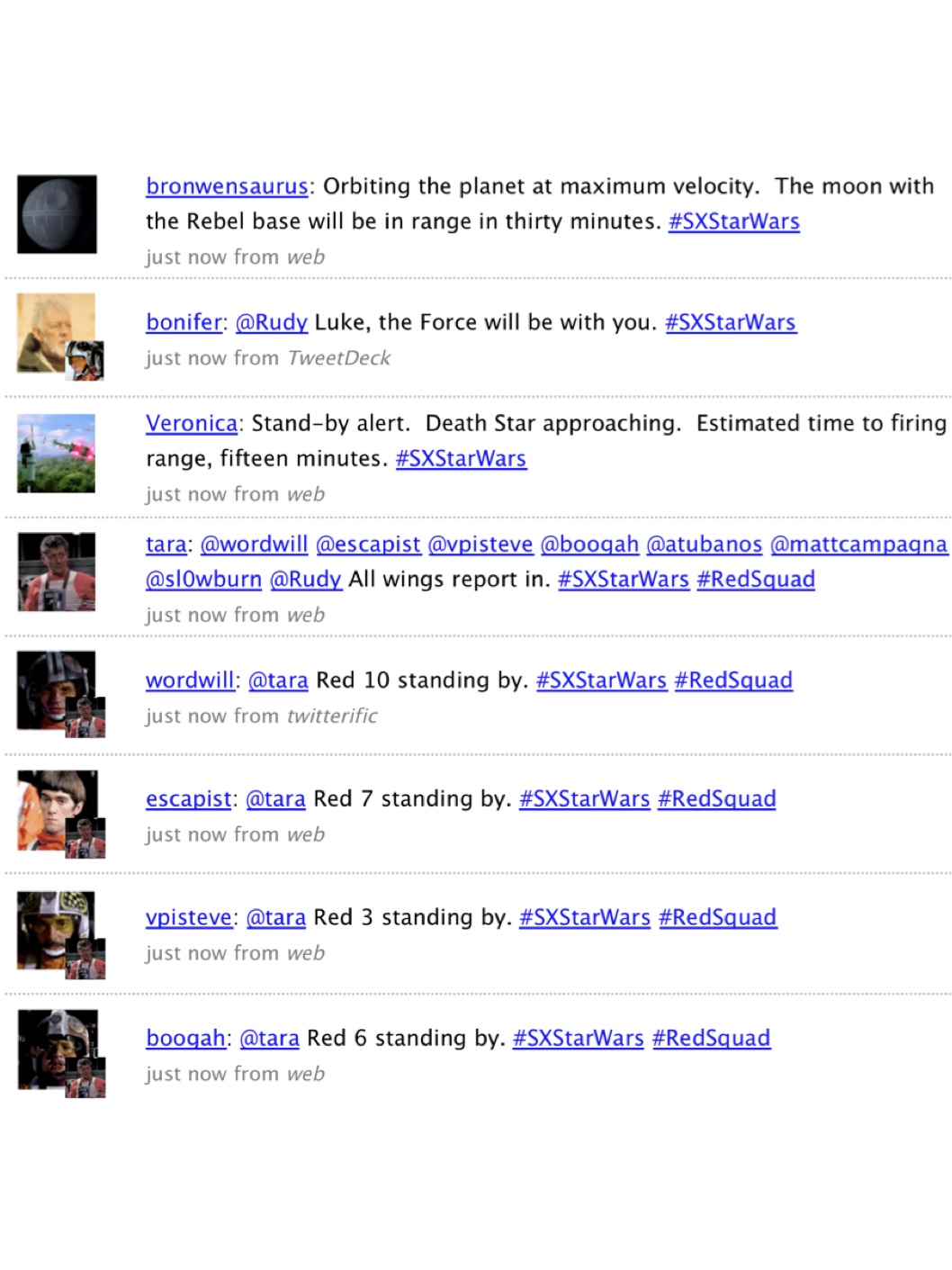
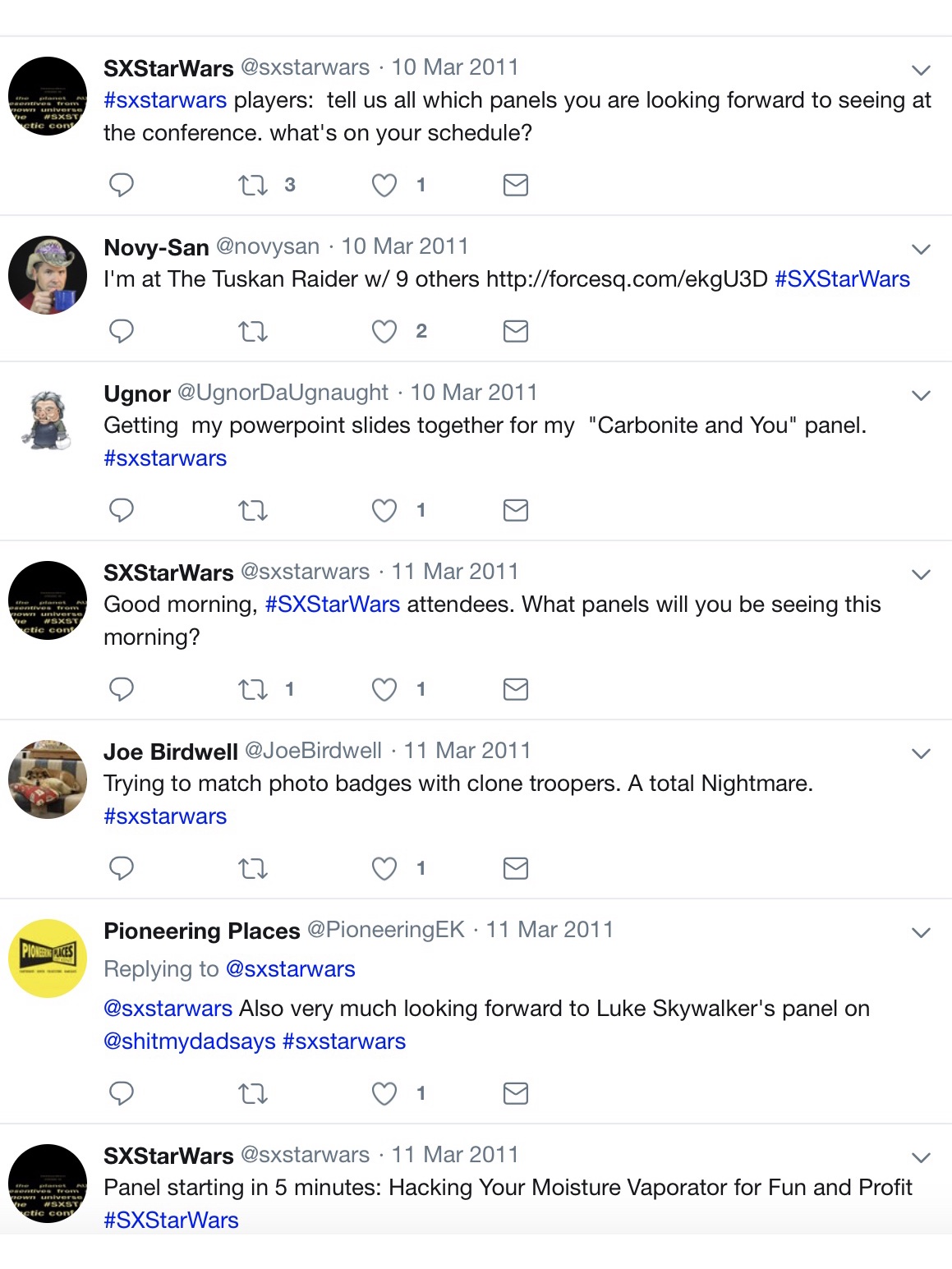
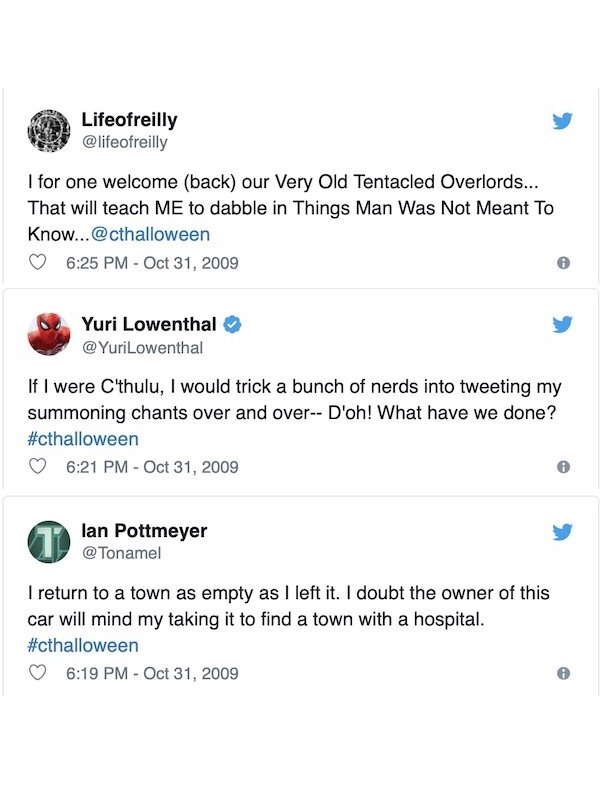
The projects ranged from adapting a Herman Melville short story into one of the first Twitter novels, to a 90-minute live Twitter reenactment of the Death Star attack, to a massive multiplayer Halloween epic based on the stories of H.P. Lovecraft. Each one was a different answer to the same question: what does a story look like when every audience member has a piece of it?
Writer, organizer, and instigator
For each project, I was the primary author and organizer: writing the source fiction, designing the participation frameworks, recruiting and coordinating performers and collaborators, and moderating the live experiences as they unfolded in real time.
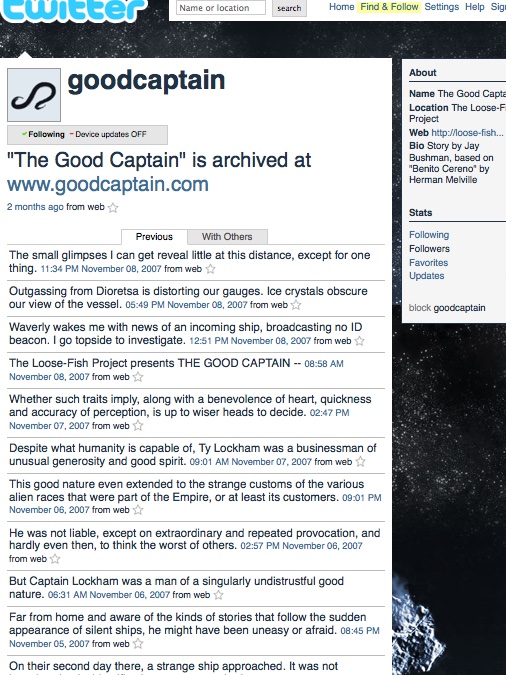
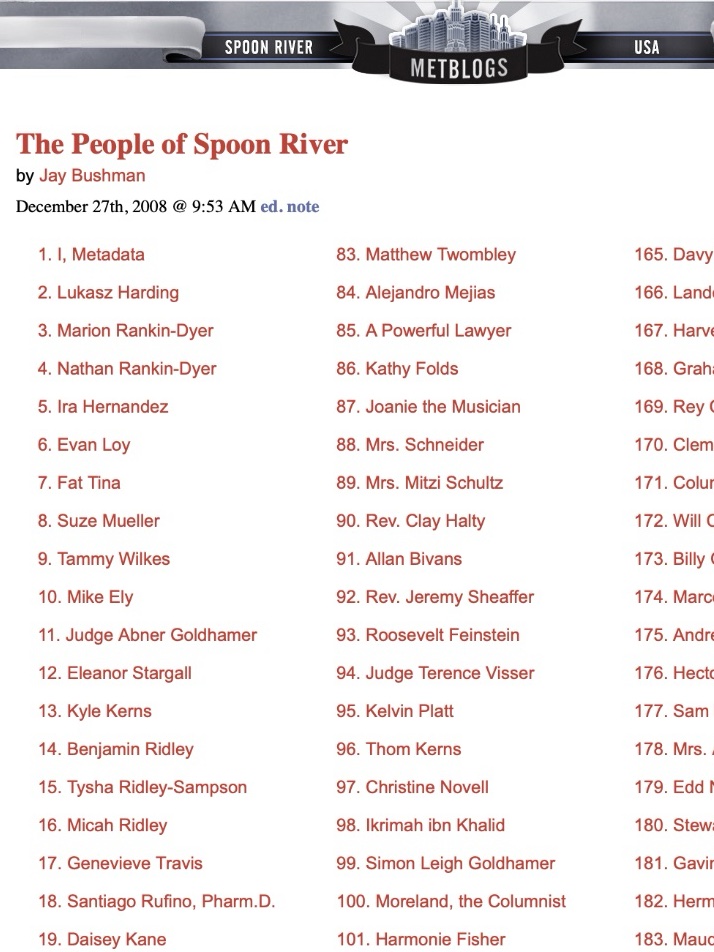
Making platforms do things they weren't built for
The constraint was the point. Twitter's 140-character limit, the reverse-chronological feed, the public/reply structure – these weren't obstacles to work around, they were the form. A Twitter novel forced compression and real-time pacing in ways prose couldn't. A live hashtag event created shared experience across thousands of strangers simultaneously. A group blog could give voice to an entire fictional community.
The collaborative events required the most design work: recruiting performers, writing character briefs, timing the beats of a live story unfolding across dozens of accounts, and staying responsive when the audience started participating in ways you hadn't anticipated. (That last part was always the best part.)
An early proof of concept for social fiction
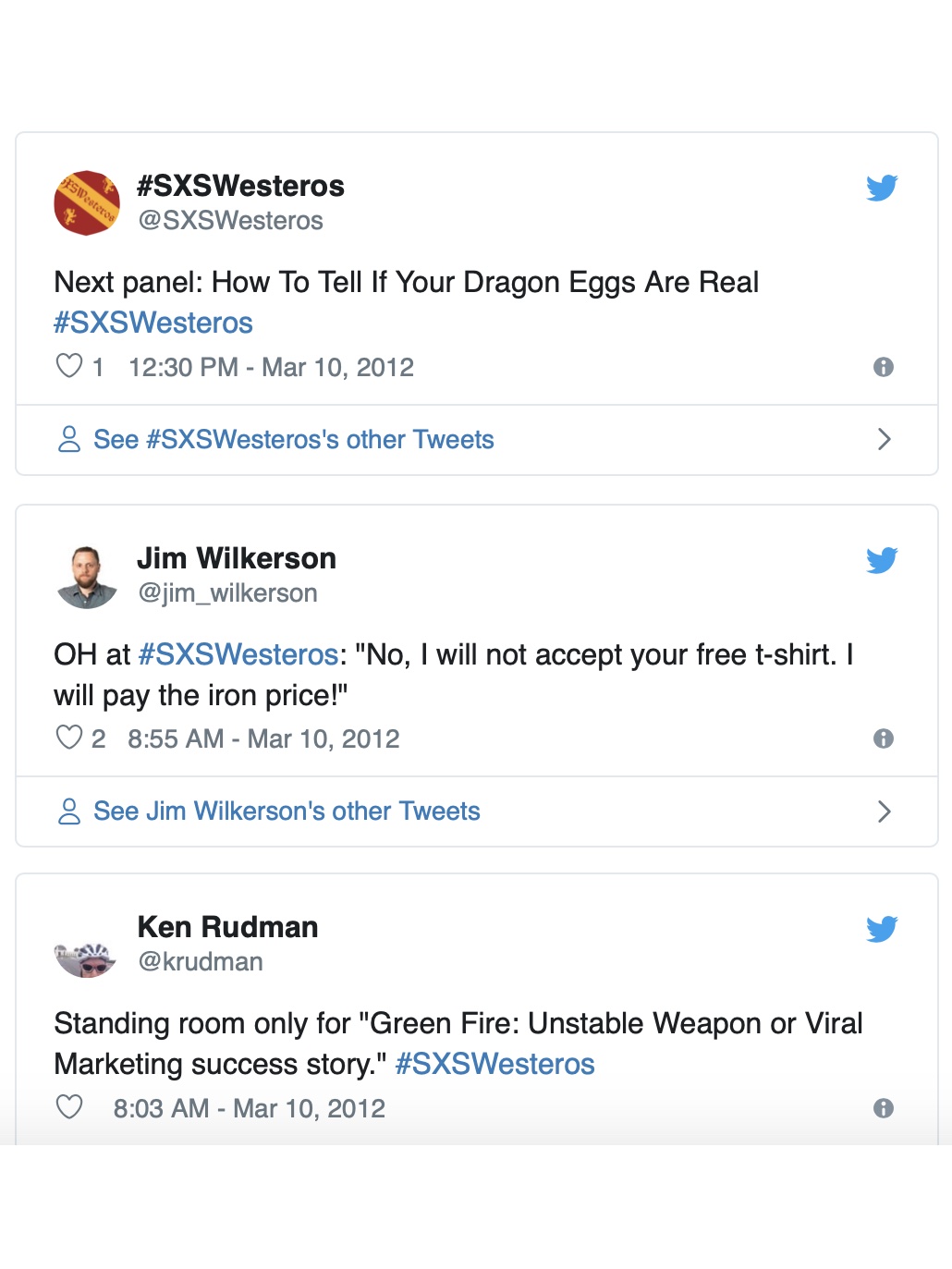
The Good Captain and The Spoon River Metblog were both presented at the International Symposium on Electronic Art; The Good Captain was also featured at the Electronic Literature Organization Conference and led New Scientist magazine to dub me "The Epic Poet of Twitter." #SXStarWars trended for two days after the live event and was covered by Variety and the official Star Wars blog. #SXSWesteros was covered by CNN.
Taken together, these projects established a vocabulary for social fiction that later became standard practice – character accounts, live narrative events, platform-native storytelling. They were also genuinely exciting to make, which is why I kept making them.